
Finance Minister Nirmala Sitharaman announced that India's real GDP grew by 7.8 per cent in the April-June quarter, surpassing the RBI's forecast. She attributed this strong performance to government reforms and agile economic management, reaffirming the government's commitment to expanding economic opportunities.
Union Finance Minister Nirmala Sitharaman expressed strong confidence in India achieving over 10 per cent economic growth, advocating for increased technology adoption and innovation. She urged overcoming scepticism and highlighted technology's transformative role in agriculture and public sector reforms, while also launching a new fund and book at an IIT Madras event.

Finance Minister Nirmala Sitharaman announced that the Goods and Services Tax (GST) Council's October 7 meeting will focus on 'GST 2.0' process reforms, including e-invoicing and input tax credit rules, while also addressing complex issues surrounding the taxation of the digital economy and cryptocurrency.

Economists highlight that resolving domestic policy bottlenecks, particularly through land reforms and improving the ease of doing business, will be critical for Prime Minister Narendra Modi's 'next-generation reforms' and India's economic transformation towards its 'Viksit Bharat' vision for 2047.

The Finance Ministry is set to commence its pre-budget meetings on October 12, initiating preparations for the Union Budget 2027-28, which will be the fourth budget of the Modi 3.0 government and the tenth for Finance Minister Nirmala Sitharaman.

'The day we start making rules purely along caste lines, we only divide society further. That's the conversation the government needs to have, and soon.'
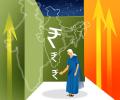
The International Monetary Fund (IMF) has increased India's growth forecast to 7 per cent for 2026-27, up from 6.4 per cent, attributing this robust outlook to resilient domestic demand and strong services activity, positioning India as one of the fastest-growing major economies.
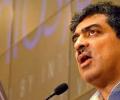
Nandan Nilekani, head of the task force on exam reforms, stated on Tuesday that technology and a systematic approach can solve the issue of question paper leaks. He suggested generating exam papers from a large question bank at the last minute to remove economic incentives for leaks and also proposed moving towards computer-based testing.

India's Next-Gen GST reforms are proving instrumental in driving robust economic growth, simplifying tax compliance, and fostering a more inclusive business environment across the nation, aligning with the vision of a 'Viksit Bharat', writes Finance Minister Nirmala Sitharaman.

If the new MDR regime is rolled out from the middle of this month, as scheduled, it should count as one of the boldest political actions by the Modi government on an economic-policy issue, and a signal that it is less worried about erosion of political capital it draws from one of its key constituencies, notes A K Bhattacharya.

Russian Foreign Minister Sergey Lavrov has publicly supported India's bid for a permanent seat on the United Nations Security Council. He stated that any reform of the UNSC should not grant additional seats to Western countries like Germany and Japan, citing their "militarism and revanchism." Instead, Russia advocates for increased representation from Asia, Africa, and Latin America, specifically backing India and Brazil, while also emphasizing the need to address African interests.

Chief Economic Advisor V Anantha Nageswaran stated that the second half of the current fiscal year (FY27) is expected to be challenging due to increased downside risks to global growth and rising interest rates worldwide.

The Insurance Brokers Association of India (IBAI) has warned that the IRDAI's proposed overhaul of insurance distribution practices could lead to a 70 per cent fall in revenues for intermediaries and result in 10 lakh job losses, citing concerns over the tight feedback deadline and the global uniqueness of the proposed architecture.
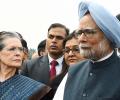
Former Indian Prime Minister Manmohan Singh passed away on Thursday night at the age of 92. He was brought to the emergency department of AIIMS Delhi in critical condition after "sudden loss of consciousness."


India has achieved its highest-ever annual Foreign Direct Investment (FDI) inflow of USD 94.53 billion in FY 2025-26, with cumulative FDI reaching USD 843 billion since 2014-15, announced Commerce and Industry Minister Piyush Goyal. Production Linked Incentive (PLI) schemes have also significantly boosted investment, production, exports, and job creation.

Union Finance Minister Nirmala Sitharaman announced the government's plan to establish a high-powered committee to examine reforms for the banking sector, aligning it with the vision of a 'Viksit Bharat' (Developed India) and India's next phase of growth.
Singapore's Fullerton Fund pumps more into China, cuts exposure in India

External Affairs Minister S Jaishankar stated that the world is entering an age of flux marked by conflicts and tariff volatility, requiring India to respond effectively to these challenges. He reiterated India's consistent stance on the Russia-Ukraine conflict, advocating for dialogue and diplomacy, and highlighted India's efforts to engage with both sides. Jaishankar also emphasised India's role in championing the voice of the Global South and navigating complex strategic partnerships in a multi-aligned world.

Prime Minister Narendra Modi, addressing the BRICS summit, called for a fundamental shift in global governance, advocating for the replacement of the current 'pyramid of privilege' with a 'platform of partnership' where the Global South becomes a 'rule shaper' rather than a 'rule follower'.

'While the population remains relatively young, its age structure is beginning to shift, setting the stage for a much older population later this century.'
His statement comes in the wake of a Supreme Court order halting divestment in two oil PSUs.

'I don't really expect the August increase in food prices, which was close to 6 per cent, to persist as we go close to the end of this year.'
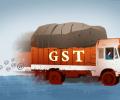
India's Goods and Services Tax (GST) receipts, after accounting for refunds, surged by 18.1 per cent annually to approximately 1.77 trillion in September, marking its fastest growth in six months. This increase was primarily driven by a significant rise in tax revenue from imports, which grew 26 per cent annually.

'Wages have not risen. Rural wages have stagnated. The growth was 0.7 per cent last year. For casual and irregular labour, the wage growth is negative.'

'You have to get private investment to somewhere between 35% to 36% of GDP. It is hovering about 30%-31%.'

Competition Commission of India (CCI) chairperson Ravneet Kaur has warned that the rapid adoption of artificial intelligence (AI) could intensify anti-competitive practices in digital markets, including self-preferencing, discriminatory pricing, and market manipulation. She highlighted the CCI's ongoing study into AI's impact on competition and stressed the regulator's role in fostering growth while preventing abuse of dominance.

India's External Affairs Minister S Jaishankar, addressing the UN General Assembly, strongly criticised Pakistan for its support of terrorism, asserting India's right to self-defence and stating that friendship cannot coexist with terrorism. He also highlighted India's global responsibilities, contributions to the Global South, and its stance on reformed multilateralism and AI.

India's GST Council has approved changes allowing small online sellers to register in states without physical premises by using an e-commerce operator's warehouse as their principal place of business, aiming to boost national sales for small businesses.

Prime Minister Narendra Modi has urged for a global framework to combat cross-border cyber frauds and deepfakes, highlighting the need for governments, tech companies, telecom operators, and financial institutions to collaborate. Speaking at the India Mobile Congress 2026, Modi stressed that technology thrives on trust and that India is ready to share its expertise in tackling cyber threats. He also noted the rapid expansion of 5G and the success of digital governance initiatives like Direct Benefit Transfer.
Britain hopes that after the forthcoming Lok Sabha elections the next government will carry forward the economic reforms process that should see India emerging as the third biggest economy in the world over the years to come.
India's Finance Minister P Chidambaram has described the country's banking sector as the driving force of economic reforms, though New Delhi is still to fully open the sector to foreign financial institutions.

South African President Cyril Ramaphosa on Friday described BRICS as an important global forum, highlighting the grouping's growing demographic and economic weight and noting that its members account for around half of the world's population and 40 percent of global GDP.
After Congress, the United Progressive Alliance on Thursday endorsed government's recent tough economic decisions and discussed the need "to do more reforms".
Hindutva is being conflated with good governance and economic performance in a determined bid to promote Narendra Modi, says Sonali Ranade

Rising bond yields in the US and other advanced economies are making it increasingly difficult for Indian equities to attract foreign portfolio investors (FPIs), leading to pressure on valuations and potentially lower returns for domestic investors.

BRICS finance ministers and central bank governors have called for increased representation of emerging-market and developing economies in the IMF and World Bank, while also criticising unilateral tariffs and trade measures, as the expanded bloc aims to bolster financial cooperation amidst global fragmentation.
